
Two Systems, Very Different Approaches
When you need a septic system in Harris County, you'll generally choose between two main types: conventional (also called anaerobic) and aerobic. Both treat household wastewater, but they do it very differently — and the choice affects your upfront cost, ongoing maintenance, property requirements, and legal obligations.
How Conventional Systems Work
A conventional septic system is the simpler of the two. Wastewater flows from your home into a buried tank, where gravity separates it into three layers: scum (fats and oils) floats to the top, sludge (heavy solids) sinks to the bottom, and partially clarified liquid (effluent) sits in the middle. The effluent flows out to a drainfield — a network of perforated pipes buried in gravel-filled trenches — where soil bacteria complete the treatment process as the water percolates through the ground.
There are no moving parts, no electricity required, and no ongoing mechanical maintenance. The system works passively using gravity and natural biological processes.
How Aerobic Systems Work
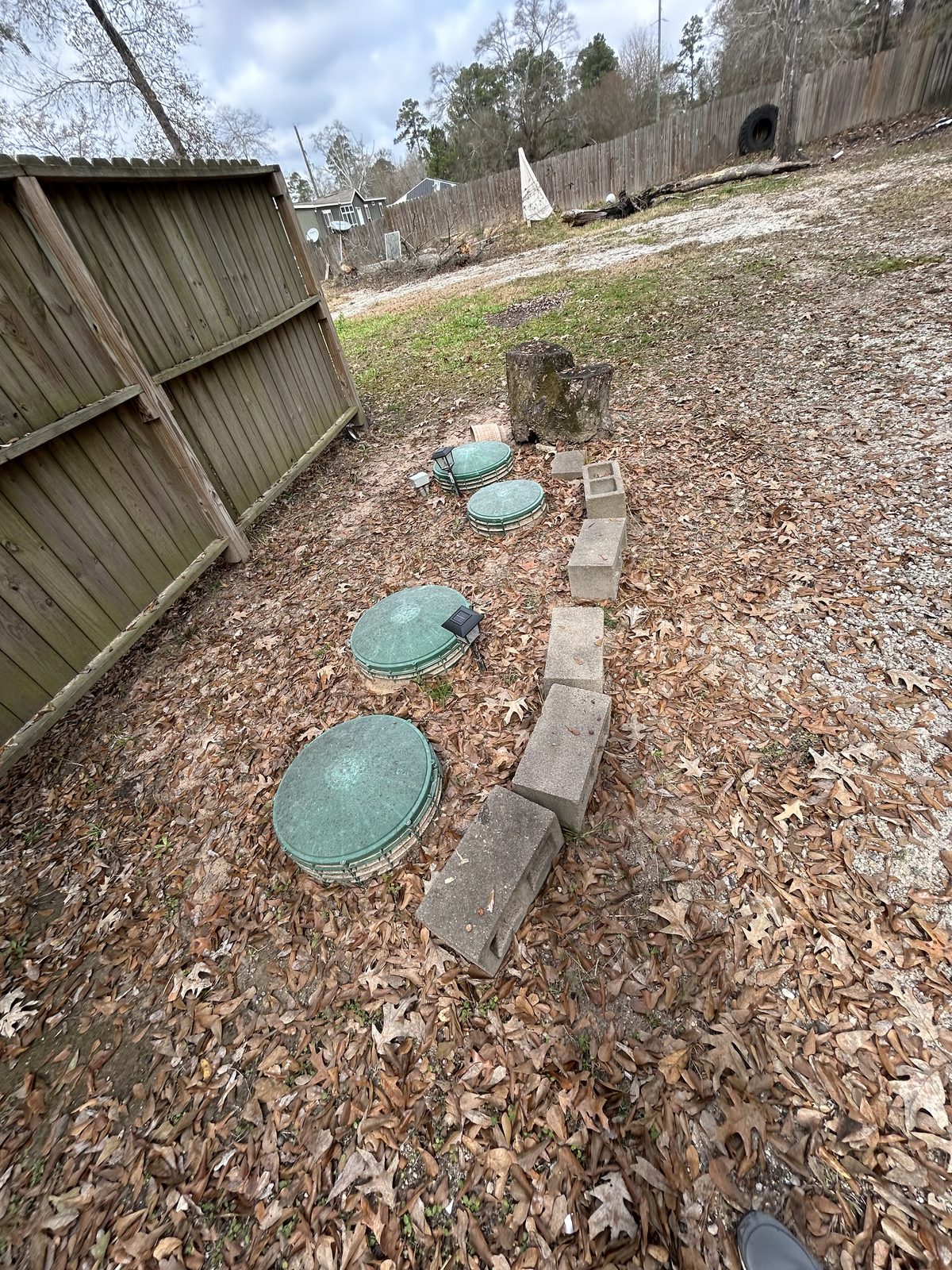
An aerobic treatment unit (ATU) is essentially a miniature wastewater treatment plant. Like a conventional system, it has a tank where waste collects. But it adds a critical component: an electric aerator (blower or compressor) that injects air into the treatment chamber. This oxygen-rich environment supports aerobic bacteria, which are much more efficient at breaking down waste than the anaerobic bacteria in a conventional tank.
The result is cleaner effluent that can be disposed of via spray heads on the surface of your yard, drip irrigation lines, or other methods. Because the treatment is more thorough, aerobic systems can work on properties where soil conditions won't support a conventional drainfield.
Cost Comparison
| Factor | Conventional | Aerobic |
|---|---|---|
| Installation Cost | $5,000 – $8,000 | $8,000 – $15,000+ |
| Annual Maintenance | $100 – $200/year | $250 – $650/year |
| Pumping | Every 3–5 years ($235–$400) | As needed (varies) |
| Electricity | None | $10 – $20/month |
| Typical Lifespan | 20 – 30 years | 15 – 20 years |
Maintenance Requirements
Conventional systems require minimal ongoing maintenance. Pump the tank every 3–5 years, check the effluent filter annually, and avoid putting anything harmful down the drain. There is no legal requirement for a maintenance contract, though annual inspections are recommended.
Aerobic systems have mandatory maintenance requirements under Texas law. Harris County requires inspection by a licensed maintenance provider every three months (quarterly). The TCEQ state minimum is every four months, but Harris County has adopted a more stringent schedule, with reports filed to your county within 14 days. You must maintain a current maintenance contract at all times. The system's electrical components — aerator, pumps, alarms, disinfection — need regular checking and occasional replacement.
When to Choose Conventional
- Your property has suitable soil for a drainfield (good percolation rates)
- You have enough space for the drainfield (typically 600–1,200 sq ft)
- You prefer lower upfront and ongoing costs
- You want a simpler system with fewer things that can break
- The property is a secondary or seasonal residence
When to Choose Aerobic
- Your soil won't support a conventional drainfield (tight clay, high water table, shallow bedrock)
- Your lot is too small for a conventional drainfield
- The property is close to a water body, well, or environmentally sensitive area
- Your county requires aerobic treatment for your location
- You're building on a lot where a conventional system previously failed
Which Is Better?
Neither system is universally "better" — the right choice depends on your property's soil conditions, lot size, budget, and local requirements. This is exactly why having a Registered Sanitarian evaluate your property matters. Unlike most septic companies that only install one type or the other, Enviro-Pal's William Palmer can perform a complete site evaluation and recommend the most cost-effective solution for your specific situation.
Contact us at 281-685-6642 for a site evaluation and honest recommendation.